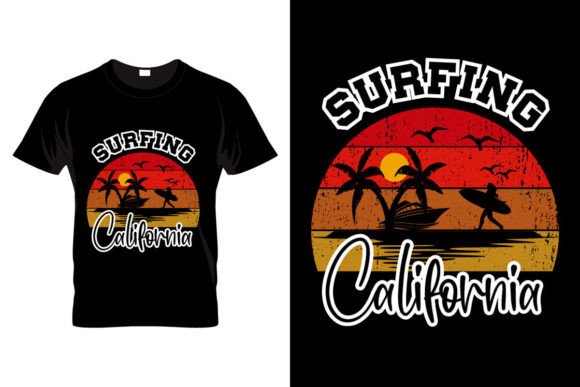
A Real-World Review of the Surfing California Embroidery Design
When you’re browsing for a new embroidery file to use in your projects, it’s easy to get caught up in the preview image. The real test, however, is imagining how that digital design will translate into physical stitches on real fabric. Today, I’m putting the Surfing California Summer T-shirt Design through that lens, evaluating it from the perspective of an embroidery designer preparing for actual client work and handmade products.
The First Impression: California Casual, Made for Stitches
The mood here is unmistakably sunny and laid-back. It’s not a hyper-detailed, realistic surf scene; it’s a graphic, stylized emblem. This is a significant advantage for embroidery. The clean shapes and open layout mean it’s inherently suited to being stitched out. You can immediately envision this on a lightweight cotton tee or the front panel of a canvas tote bag. The personality is casual, friendly, and universally appealing—it doesn’t feel niche or overly trendy, which gives it a wide application range for a craft business.
Where This Design Naturally Belongs
In my workshop, I’m thinking about a recent request: a client wanted a personalized gift for a friend moving to the coast. This Surfing California design sparked an idea. It’s perfect for that kind of personalized gift—it’s celebratory and theme-based without being too literal. Beyond t-shirts, which the title suggests, I’d confidently hoist this onto a cozy fleece sweatshirt, a sturdy denim apron for a beach-house kitchen, or even a set of tea towels. For a small shop focusing on casual, lifestyle merchandise, this file is a solid design asset.
Performance in Real-Life Embroidery Situations
Let’s talk practical application. The success of an embroidery file hinges on how it handles the transition from screen to stitch.
On custom apparel like t-shirts and polo shirts, the design’s scale is key. It’s bold enough to be a central feature but not so large that it becomes cumbersome on lighter fabrics. For baby clothes or nursery decor, you’d likely scale it down, and the clean lines should maintain clarity. As an embroidered patch, it would be fantastic—the graphic nature would translate well into a satin stitch border, making it a great standalone product for an Etsy seller.
Thinking about holiday gifts or small business merchandise, this design has that “giftability” factor. It’s recognizable and evokes a positive feeling without needing personalization. That boosts customer engagement. Stitched onto a tote bag or a pillow cover, it becomes a functional, attractive product that speaks to a hobby or a beloved place.
The Careful Considerations: Where to Proceed with Caution
Every design has its ideal applications and its trickier ones. Here’s my practical judgment for this one.
- Small Hoop Sizes & Tiny Details: The lettering is integrated into the graphic. If you’re planning a very small version, say for a cap or a baby bib, those condensed areas need attention. A test run on scrap fabric is essential to ensure the “California” text remains legible and doesn’t become a dense, puckered blob.
- Stretchy or Textured Fabrics: On very stretchy knits or heavily textured fabrics like some sweaters, the larger, solid shape of the surfboard could be challenging. Using the correct stabilizer is paramount here to prevent distortion.
- Dark Fabric & Thread Contrast: This design, in its standard form, likely assumes a light background. On dark fabric, you’d need to plan your thread colors strategically. A white or light-colored fill stitch for the main elements would create strong contrast, but it’s a consideration that affects your material choice from the start.
- Dense Stitch Areas: The preview suggests areas of solid fill. Monitoring stitch density in your machine settings will help prevent fabric pull, especially on thinner materials like standard t-shirts.
Impact on Your Craft Business and Client Projects
Using a well-composed design like this affects more than just the stitchout; it influences your professional results.
Visual Appeal & Stitching Clarity: When stitched cleanly, this design looks intentional and professional. That clarity builds customer trust. It doesn’t look like a generic clipart; it looks like a proper embroidered design. This enhances the perceived value of your handmade product.
Brand Consistency for Small Shops: If your boutique or Etsy shop has a casual, West-coast-inspired vibe, this file could be a consistent element across different products—from apparel to home goods. That consistency strengthens your brand presentation.
Giftability & Recognition: As mentioned, the theme is instantly recognizable and positive. For creative entrepreneurs selling at craft fairs or through printable mockups online, this makes marketing easier. Customers quickly understand the product’s appeal.
Practical Notes from the Embroidery Desk
Before you load this file and start your project, here’s my routine checklist. These steps turn a good digital product into a great finished product.
- Test on Scrap Fabric First. Always. Use both a light and a dark scrap to see how the thread color contrast works and to check for any issues with stitch density or small detail definition.
- Confirm Your Hoop Size. The design’s dimensions will determine the minimum hoop you need. Don’t assume—verify in your software.
- Inspect the Small Details. Zoom in on the file in your editing software. Look at the corners of the surfboard, the lettering. Are they clean paths suitable for a satin stitch or a fill stitch?
- Plan Your Stabilizer. Match your stabilizer to the fabric. For t-shirts, a cut-away might be best for durability, especially if it’s a gift meant for frequent wear.
- Check Licensing Thoroughly. The product description mentions it’s an instant download file. It is crucial to read the included license or product terms to confirm whether it’s for personal use, commercial embroidery projects, or both. Never assume before selling finished items.
- Consider Fabric Texture. How will this look on a smooth polo shirt versus a nappy towel? The texture interacts with the stitch type, affecting the final look.
Final Thoughts: A Versatile Graphic for the Maker’s Toolkit
The Surfing California Summer T-shirt Design, from my designer’s viewpoint, is a strong candidate for a wide array of projects. It’s not overly complex, which makes it reliable for embroidery. Its thematic appeal opens doors for personalized gifts, holiday items, and lifestyle-focused merchandise for small shops. The key to success, as with any digital embroidery file, lies in that practical pre-work: testing, adjusting, and matching the design to the right fabric and product. When you do that, this graphic has the potential to stitch out into clean, attractive products that your customers or gift recipients will genuinely appreciate. It’s a reminder that a good embroidery project starts with a design that understands its own transition from pixels to thread.